Why Attic Ventilation Matters
How Solar Attic Fans Help
A solar attic fan is an exhaust upgrade. The 30W unit we install moves enough air in full sun to flush a typical attic in a handful of minutes. Here is where it fits, where it does not, and what you will feel inside the house after a typical install.
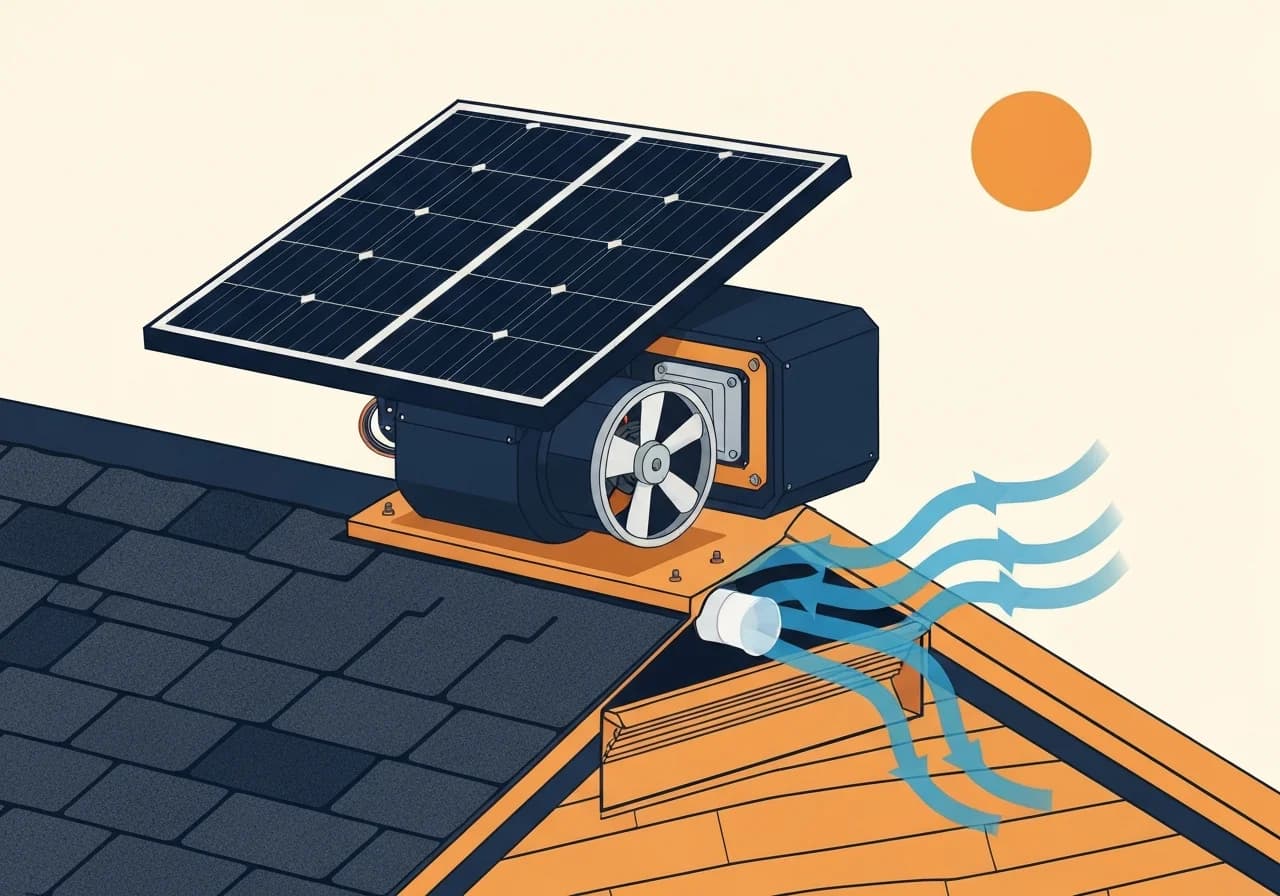
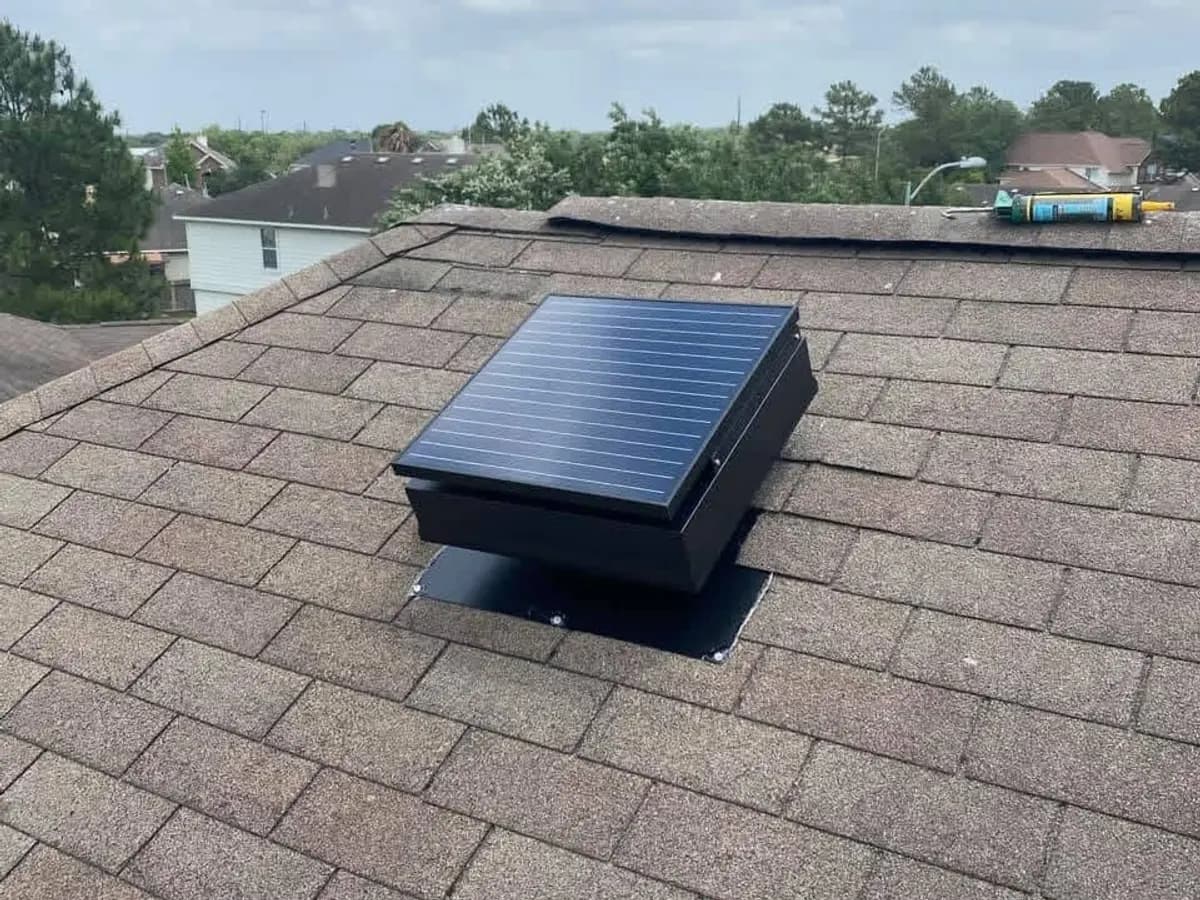
How a solar fan fits the system
A solar attic fan is an exhaust upgrade. It replaces or backs up your passive ridge or box vents with an active fan that moves a lot more air. The 30W unit we install flushes a typical attic several times an hour. Passive vents on the same attic might barely move the air at all on a still afternoon.
Intake matching is the whole game. The fan can only push out what the intake side can pull in. An active fan paired with choked soffit vents will just suck conditioned air up out of the house through ceiling gaps. That costs you money. A pre-install attic check confirms your intake side can feed the fan. Most homes have what they need. Some need a soffit retrofit first.
When a solar fan helps most. Homes with long ranches and deep roof spans where the air at the far end never gets pulled by the ridge. Homes with a single west-facing slope that cooks for six hours straight. Homes in humid climates where you need to flush moisture, not just heat. Two-story homes where the upstairs is always 8 degrees hotter than the downstairs. In all of these cases, an active fan changes the temperature curve by mid-afternoon instead of waiting until midnight for passive flow to catch up.
When a solar fan is not the right first move. Gable-only homes that have no soffit vents at all need an intake retrofit first. Adding exhaust without intake will pull the air from the wrong place. Cathedral or vaulted ceilings with no actual attic space have nowhere for the fan to vent from, so a different ventilation strategy applies. Homes with severe ice dam history in cold zones need an intake balance check before any powered exhaust gets added. Our installer walks the attic before quoting so you do not pay for a fan that cannot do its job.
Sized right, the math works. One 30W solar fan handles most homes up to 2,200 square feet of attic floor. Bigger homes, long single-story ranches over 2,500 square feet, or homes split across awkward roof planes sometimes use two fans with separate intakes. The roofer measures during the pre-install visit and sizes accordingly. You never pay for more fan than your roof needs.
The thermostat and humidistat do the thinking. The unit ships with a thermostat preset to start spinning around 80°F attic air and a humidistat that kicks in when attic humidity climbs above 70 percent. So the fan does not run on a cool 65°F spring morning when it has nothing to do. It runs in the afternoon stretch when your attic is loading up heat, and it keeps running on still humid nights in Florida and the Gulf Coast when wet air would otherwise condense on the ducts. Both dials are adjustable, and the installer sets them based on your climate zone.
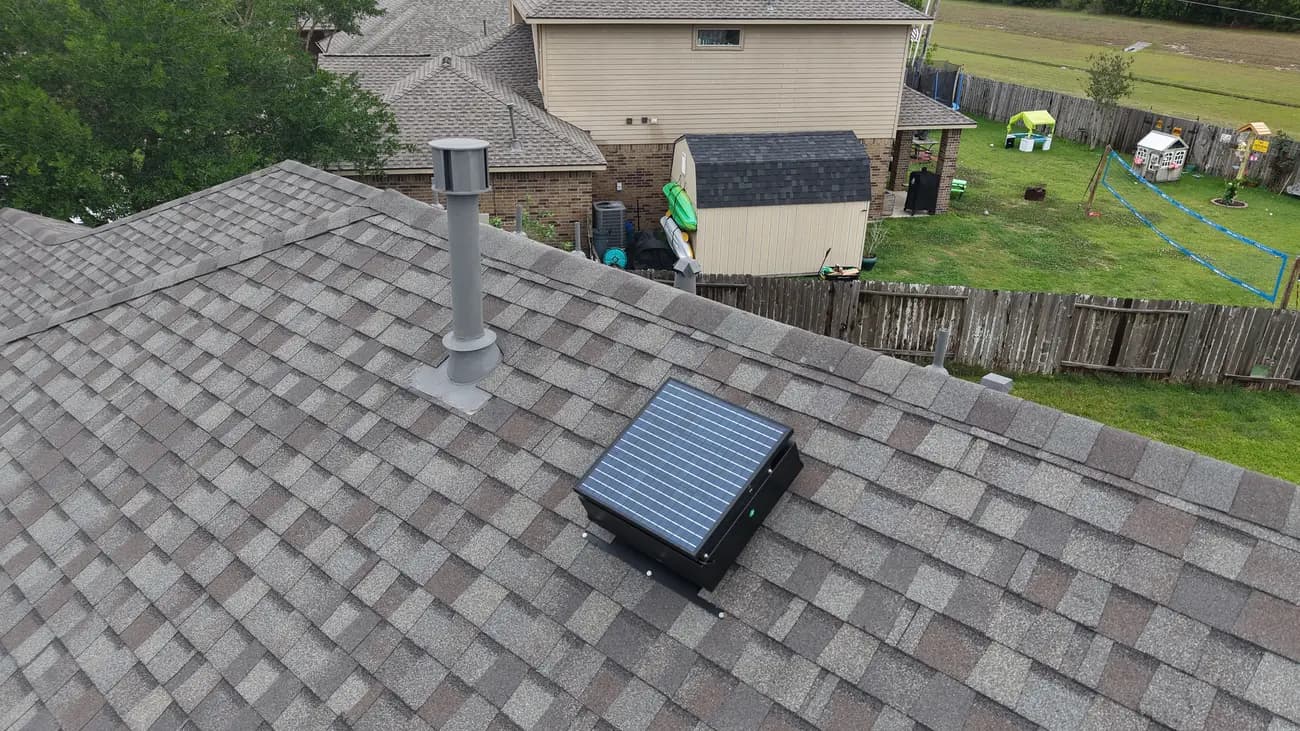
What you will feel after install
Most homeowners notice the difference within a week. The first clue is usually the upstairs bedroom or the room over the garage. The room that was always too hot by 4pm tracks the rest of the house within a degree or two by sundown. That gap closes because the ceiling above the room is no longer radiating 130-degree heat down into it.
The second clue is the AC. The compressor that used to grind from 2pm until 9pm starts cycling off again. You hear it stop. You feel the house settle. Across a full Texas or Florida cooling season, that lower duty cycle is where the 15 to 25 percent savings comes from. On a $280 August bill, that is $42 to $70 back. Across May through October, the math turns into real money.
In humid climates, the third clue is the attic itself. Wet attic air gets flushed out instead of condensing on the cool side of your ductwork. Less moisture means no more dark stains on the roof deck, no more musty smell when you open the attic hatch, and a much lower chance of mildew or rot showing up at the next roof inspection. Florida and Gulf Coast owners report this change as clearly as the temperature change.
The fourth clue is invisible until you sell the house: shingle life. A cooler, drier attic adds years to the roof above it. Owners who install early on a long-life roof routinely get the full warranty term out of those shingles instead of replacing them years earlier. That is the rescue your roof never knew it needed.
One thing you will not feel is a noise problem. The brushless motor on the fan runs quiet enough that most homeowners only hear it if they are standing right under the attic hatch. From the curb, the unit is invisible because it mounts on the back slope, and from inside the house, you would have to know it was there to notice. The only sound your AC will make is the sound of it shutting off earlier than it used to.
What comes next
Hot air has to leave at the top. Cool air has to enter at the bottom. The two sides have to match. A 30W solar attic fan adds the active push most homes need to keep the attic from cooking in July and August. Read the rest of the guide or jump straight to the fan.
Why your attic gets so hot
Roof color, shingle material, deck angle, and sun load. The four levers behind a 130°F attic.
Signs of poor ventilation
Hot upstairs rooms, runaway power bills, stained roof decks. The clues to look for from the ground.
How ventilation works
Intake, exhaust, balance, airflow. The plain-English version of the chimney effect on your roof.
Myths and facts
Six things homeowners hear from neighbors and contractors. The truth from the roof.