Why Attic Ventilation Matters
How Attic Ventilation Actually Works
Attic ventilation runs on one simple rule from physics: warm air rises. Give it a low spot to enter from and a high spot to escape from, and the air flows on its own. The roof acts like a gentle chimney all summer long, as long as both ends are open.
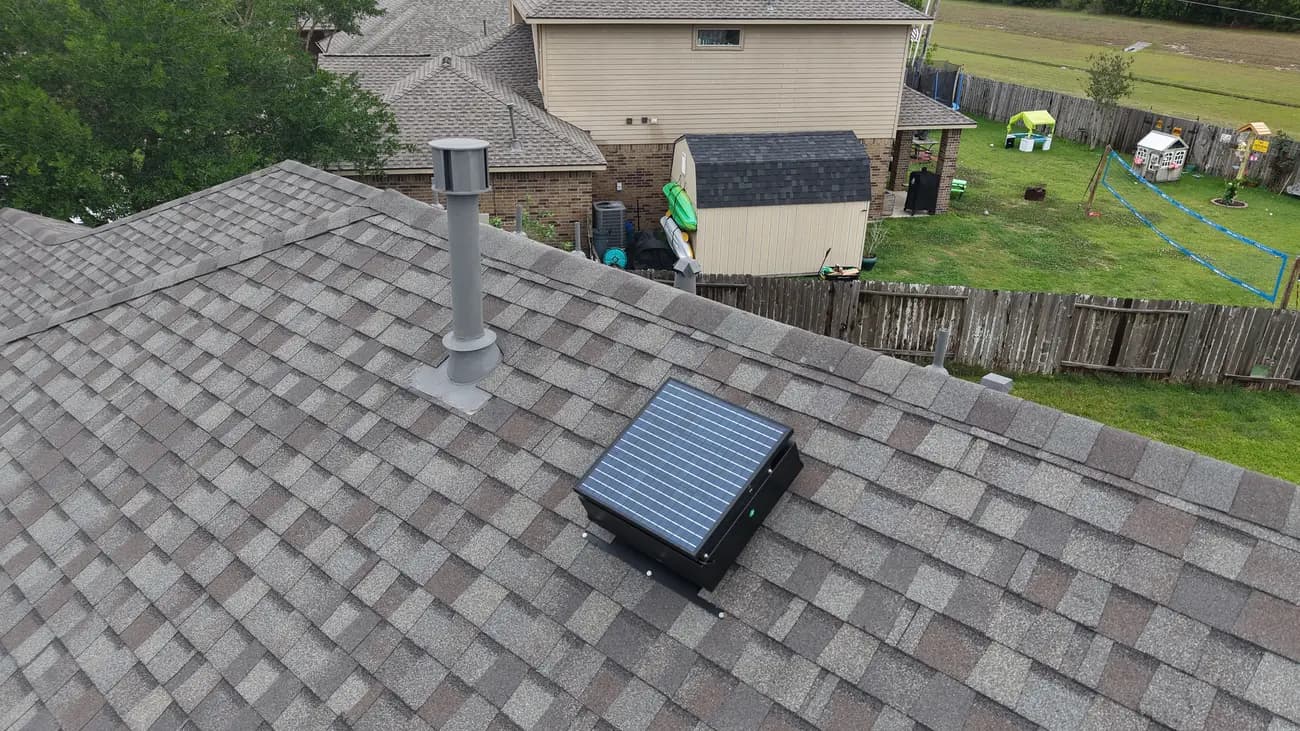
Attic ventilation runs on one simple rule from physics: warm air rises. If you give that warm air a low spot to enter from and a high spot to escape from, it flows on its own. Builders call this the stack effect or the chimney effect. The roof acts like a gentle chimney all summer long, as long as both ends are open.
Intake on the bottom. Intake vents sit at the lowest edge of the attic, usually under the eaves. Those are your soffit vents. The vinyl or aluminum strips with rows of small perforations. Their only job is to let outside air slip into the attic at the lowest point. Roofers aim for at least half of your total vent area to be intake, so the soffits can keep up with whatever is pulling air out at the top.
Exhaust on the top. Exhaust vents sit at or near the ridge of the roof. The most common types are ridge vents (a long strip running along the peak), gable vents (the louvered triangles on the end walls), box vents (the metal squares you see scattered across older roofs), and powered fans (electric or solar). Their job is to let the warm air at the top of the attic escape.
The chimney effect in plain English. Sun heats the roof deck. Hot air collects at the ridge. As hot air leaves through the exhaust, cooler outside air is pulled in through the soffits to replace it. That pull is what makes the system work. Block the soffits and the exhaust has nothing to draw from. Block the exhaust and the soffits have nowhere to push to. Either way the air sits still and the attic cooks.
Air change basics. The goal is to keep a steady flow of fresh air moving through the attic so heat does not have time to build up. Roofing pros aim for one full air change every few minutes during peak heat. Passive ridge vents alone barely budge the air on a still afternoon, which is why so many homes need an active boost. A 30W solar attic fan adds enough pull on top of the passive system to keep the air actually moving.
Why mixing exhaust types can hurt. One thing roofers see all the time: a house with both a ridge vent and gable vents already cut in. It seems like more is more, but the two end up short-circuiting each other. Air takes the easiest path. The ridge vent ends up pulling from the closer gable vent instead of pulling all the way down to the soffits. The far end of the attic never gets a fresh air change. Pros usually pick one exhaust type per attic and seal the others off. A solar fan added to that setup gets placed deliberately to pull from the soffits, not from a nearby gable.


What comes next
Hot air has to leave at the top. Cool air has to enter at the bottom. The two sides have to match. A 30W solar attic fan adds the active push most homes need to keep the attic from cooking in July and August. Read the rest of the guide or jump straight to the fan.
Why your attic gets so hot
Roof color, shingle material, deck angle, and sun load. The four levers behind a 130°F attic.
Signs of poor ventilation
Hot upstairs rooms, runaway power bills, stained roof decks. The clues to look for from the ground.
How solar fans help
Where an active fan changes the math, where it does not, and what you feel after install.
Myths and facts
Six things homeowners hear from neighbors and contractors. The truth from the roof.