Why Attic Ventilation Matters
Attic Ventilation Myths and Facts
Attic ventilation has been around for 80 years, and a lot of myths have piled up on top of it. Here are the six we hear most often, and the truth our installers find on the roof when they actually climb up there.
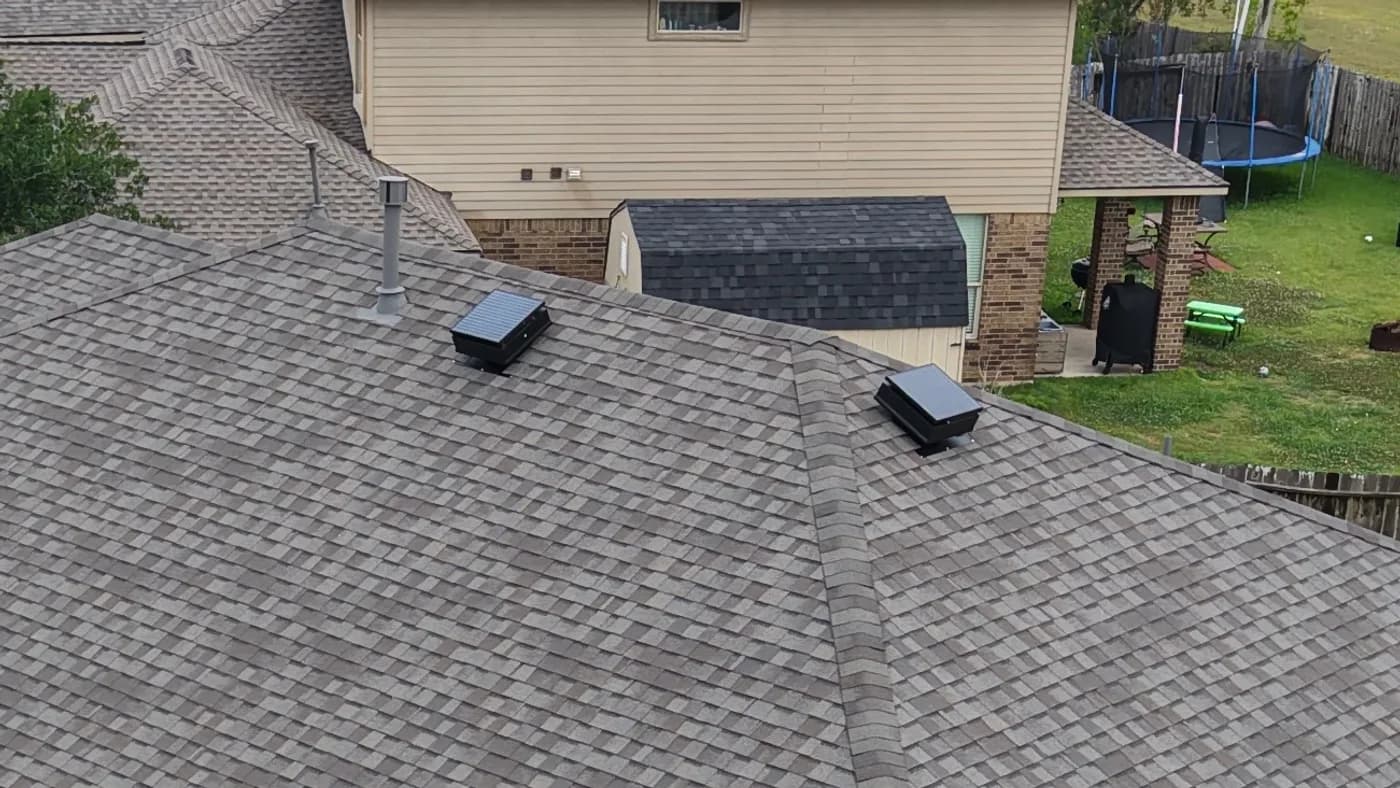
Most of these myths started with good intentions. A neighbor who had a bad install. A contractor who wanted to sell a different product. A blog post written by someone who never crawled an attic. Here is what the roof actually says.
Myth
My roof has vents already, so I am fine.
Fact
Most homes have intake vents (soffit) or exhaust vents (ridge or gable), but not enough of both. The 1:150 roofing rule splits the total vent area evenly between intake and exhaust, and most homes we walk fall short on one side or the other.
Myth
More vents are always better.
Fact
Too much exhaust without matching intake can pull conditioned air out of the house through ceiling gaps. That costs you money and breaks the airflow. Balance beats volume.
Myth
A light-colored roof does not need ventilation.
Fact
A cool roof helps, but it does not eliminate attic heat. A white shingle still hits 120°F at noon in Phoenix. The attic underneath still needs an exit path for that heat.
Myth
A solar attic fan will damage my roof.
Fact
A clean install with proper flashing and a sealed boot is no riskier than adding a plumbing vent or a ridge cap. Roofers have been cutting penetrations for 80 years. The risk comes from a sloppy install, not the fan itself.
Myth
Insulation alone keeps the heat out.
Fact
Insulation slows heat. It does not stop it. A 130°F attic still pushes heat through R-38 insulation for hours. Moving the hot air out is what changes the ceiling temperature in the room below.
Myth
Solar fans only work on bright sunny days.
Fact
They run any time the panel sees daylight. Cloudy days mean slower speeds, not zero airflow. And the hottest days, the days you need the fan most, are usually the sunniest. The timing works in your favor.

What comes next
Hot air has to leave at the top. Cool air has to enter at the bottom. The two sides have to match. A 30W solar attic fan adds the active push most homes need to keep the attic from cooking in July and August. Read the rest of the guide or jump straight to the fan.
Why your attic gets so hot
Roof color, shingle material, deck angle, and sun load. The four levers behind a 130°F attic.
Signs of poor ventilation
Hot upstairs rooms, runaway power bills, stained roof decks. The clues to look for from the ground.
How ventilation works
Intake, exhaust, balance, airflow. The plain-English version of the chimney effect on your roof.
How solar fans help
Where an active fan changes the math, where it does not, and what you feel after install.